
Craft Spirits · North Carolina
Craft Spirits Distilleries in North Carolina
Tour 12 craft spirits distilleries in North Carolina. Each offers visits, tastings or experiences you can book directly — including Blue Ridge Distilling Co., Southern Distilling Company, Doc Porter's Distillery.
12distilleries

Southern Distilling Company
One of the Southeast's largest craft distilleries
Broadslab Distillery
North Carolina's first farm distillery and moonshine legacy
Blue Ridge Distilling Co. (Defiant Whisky)
Defiant single malt in the Blue Ridge Mountains


About craft spirits distilleries in North Carolina
North Carolina has a deeper relationship with distilling than almost any state in the South. By the close of the nineteenth century it held one of the largest concentrations of legal distilleries in the country, while its winding Appalachian backroads earned an outlaw reputation during the long Prohibition years that lingered here well after national repeal. That dual heritage of licensed craft and clandestine moonshine runs through the state's modern distillers, who now turn local corn, rye and barley into everything from clear "shine" to single-malt whisky, gin, rum and botanical liqueurs.
The result is a craft-spirits map that rewards exploration. In the western mountains, Blue Ridge Distilling Co. produces its grain-to-glass Defiant single malt near Bostic using water drawn from a limestone aquifer, while Asheville's Eda Rhyne Distilling Company and Chemist Spirits lean into Appalachian foraging and small-batch experimentation. The Piedmont offers a different character: Southern Distilling Company in Statesville works at scale on the site of a historic distilling hub, Durham Distillery has built a name on copper-pot and vacuum-distilled gin, and Chapel Hill's TOPO focuses on organic, locally grown grain.
Tours range from intimate, founder-led walkthroughs to polished tasting rooms with cocktail bars. Most conclude with a guided flight, and many smaller producers such as Broadslab Distillery in Benson grow their own grain and explain the full process from field to bottle.
What to expect on a tour
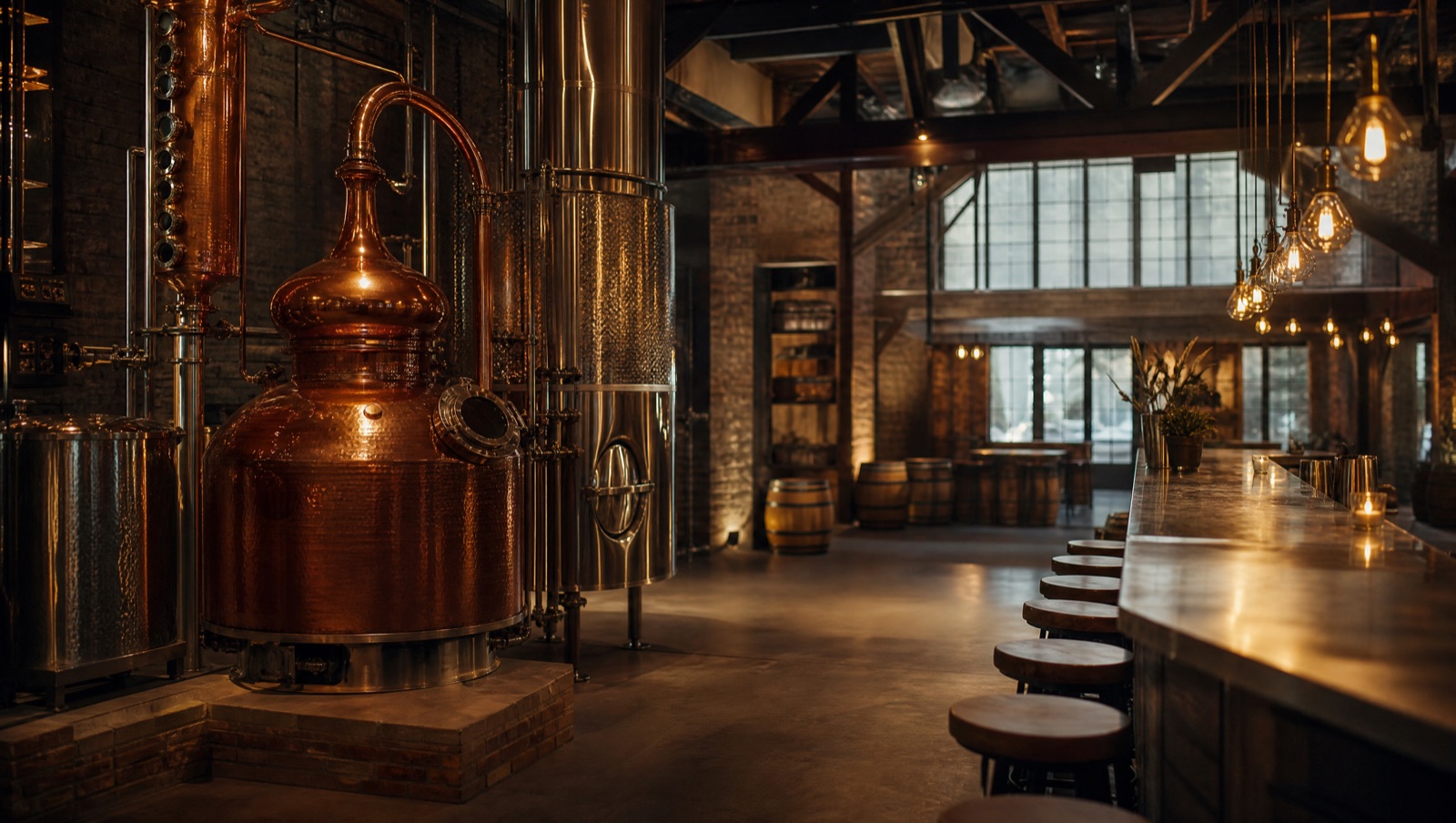
A typical visit lasts somewhere between thirty minutes and an hour, walking you from the mash and fermentation tanks past the stills to the barrel store, with a guided tasting at the end. Because the scene spans very different operations, the experience varies considerably. At a farm distillery like Broadslab in Benson, expect a hands-on, heritage-driven story that begins with grain grown on site; at Durham Distillery the emphasis is on the chemistry of gin, with copper-pot and vacuum distillation explained alongside a stop at the Conniption cocktail lounge. Mountain producers such as Eda Rhyne and Chemist Spirits in Asheville often weave in local botanicals and foraged ingredients.
Tastings usually cover a flight of the house spirits, and many distilleries have a bottle shop and bar so you can settle in for a cocktail afterwards. Sampling rules and pour sizes are set by state regulation, so quantities are modest and measured rather than open-ended.
Getting there & around
North Carolina's distilleries are spread across three broad regions, and it helps to plan around them. The western mountains cluster near Asheville, with Blue Ridge Distilling's Defiant operation a scenic drive south near Bostic. The Piedmont's Research Triangle is the densest pocket, with Durham Distillery and Chapel Hill's TOPO within easy reach of one another, and Southern Distilling a short hop up the interstate in Statesville. Coastal-plain producers such as Mother Earth Spirits in Kinston and Weldon Mills near the Roanoke River sit further east.
Most sites are best reached by car, and distances between them can be significant, so cluster visits by area rather than trying to crisscross the state. Asheville and the Triangle cities have the most walkable concentrations and the best options for taxis or rideshares, which matter if everyone in your group intends to taste.
Frequently asked
- Do I need to book a distillery tour in advance?
- It is wise to. Smaller producers, including several Asheville distilleries, often run tours only on certain days or by reservation, while larger tasting rooms may take walk-ins. Booking ahead secures your slot, confirms current opening hours and avoids arriving on a day the still is closed for production.
- How much does a tour and tasting cost?
- Prices vary by distillery and by what is included, but craft tours generally fall into a modest range, often with the tasting bundled in. Some tasting flights and cocktails are charged separately, and a number of places will credit your tour fee against a bottle purchase. Always check the individual distillery's current pricing when you book.
- How many distilleries can I realistically visit in a day?
- In a compact area such as the Research Triangle or central Asheville, two or three is comfortable, allowing time for each tour and tasting without rushing. Spreading across regions is far less practical because of driving distances, so it is better to base yourself in one area per day.
- Can I drink the samples if I'm driving?
- If you are the driver, you should not. Spirits tastings add up quickly even in small pours. Designate a non-drinking driver, use rideshares or taxis where they are available, or join an organised tour with transport. Many distilleries are happy to package bottles to enjoy later instead.
- Are the distilleries family-friendly?
- Policies differ. Some, particularly farm distilleries and those with food or outdoor space, welcome families, while others restrict the tasting room or bar to adults. Anyone tasting must be of legal drinking age, which is 21 in North Carolina. Check ahead if you plan to bring children.
- Are the tours accessible for visitors with mobility needs?
- Modern tasting rooms in the cities tend to be more accessible than rural or historic sites, some of which involve steps, uneven ground or working production floors. If step-free access matters, contact the distillery directly beforehand, as they can advise on the route and arrange accommodations where possible.
- What kinds of spirits will I find on a North Carolina tour?
- A broad spread. The state's moonshine heritage shows up in clear corn whiskey and flavoured shines, alongside aged single malts like Defiant, bourbon and rye, organic grain spirits at TOPO, gin from Durham Distillery, and rums and botanical liqueurs from producers such as Broadslab and Eda Rhyne.